

Neurocognitive Screening

Alliance Personalized Health Care • July 29, 2024

Neurocognition refers to the functional aspects of the brain. That includes receiving proper input from the senses (hearing, vision, touch, smell). It involves the processing of received information. It certainly involves the orchestration of complex movements, emotional interactions with others, and complex thought processing.

Hands holding a white cutout of a human head containing a pink heart with an EKG line on a neutral background.

At Alliance, we believe in screening for problems in this area rather than waiting for symptoms to surface. Neurocognitive decline is far more common than most realize. Here are some facts:

  • The prevalence of subjective cognitive decline is 11%, or 1 in 9 adults.
  • The prevalence by age breakdown is: age >65 years = 11.7%, age 45-64 years = 10.8%.
  • The prevalence by sex breakdown is: 11.3% among men and 10.6% among women.
  • The prevalence increases steadily with age, so that by age 90, about 33% have dementia.

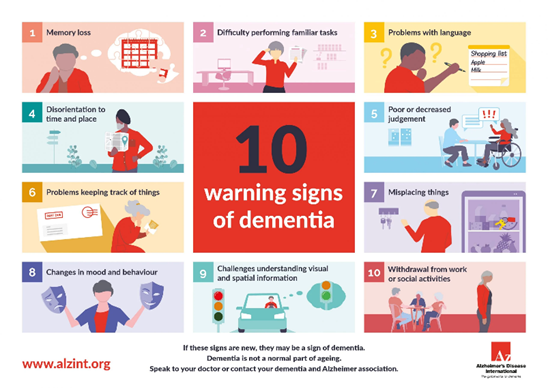
Note how early the decline is reported. So, when we think we are not processing information as fast or our reaction times are not as fast as they were just a few years ago, it may be accurate. It may not be a problem that needs to be fixed, but there are ways to optimize our well being so as to compensate for minor changes. If you are wondering about those early symptoms, here is a graphic.

10 warning signs of dementia

Adding to the surprise of how early in life decline is noted, is the following:


Less than half of adults with Subjective Cognitive Decline (45.3% of adults aged 45 years and older) reported discussing symptoms of confusion or memory loss with a health care professional.


At Alliance, we won’t wait for you to “bring it up”. We will ask you directly, and then put some science to the subject. And here is a big part of the why:


28% (1 in 4) with Subjective Cognitive Decline have coronary heart disease or have had a stroke, 33% (1 in 3) report frequent mental distress, and 66% (2 in 3) have at least two chronic diseases.


So, if a deficit is noted on screening, that’s why such an extensive evaluation begins. It’s to uncover the other things that are going on.

The Basic Screening Tests Done at Alliance

I mentioned screening tests. Here are the tests you can expect on a periodic basis inside our office (perhaps annually after the age of 50):


  • Hearing (In office, computer based, 250-8000 Hz, 0-100 dB)
  • Vision (typical eyechart or referral to ophthalmology)
  • gait/balance assessment (often the BERG test, usually done via visiting physical therapists in our office
  • paper based cognitive testing (MOCA/SLUM/MMSE). Either test is administered by medical staff, takes about 10 minutes, and has a 90% sensitivity for detection of early cognitive decline. There are 8-11 questions, scored individually and as a composite, that assess the areas of visuospatial discrimination, executive function, naming, immediate and delayed recall, attention, language, abstraction, and orientation.
  • various blood tests
  • screening for anxiety (GAD-7). It scores seven criteria for generalized anxiety. It is self-administered and scored as 0-3 in each area. It has over 80% sensitivity and takes about 2 minutes to fill out.
  • screening for depression (PHQ-9). It scores nine criteria for major depression. It is self-administered and scored as 0-3 in each area. It has over 80% sensitivity and takes about 3 minutes to fill out.

  • screening for sleepiness (Epworth Sleepiness Scale). Often overlooked is sleep quality. We use the Epworth Sleepiness Scale, which tests 8 areas for a total score of 0-24. Should a significant problem be noted, then a more intense focus on sleep hygiene or wakefulness promotion can be engaged.


Corelated with memory decline is visual processing of different inputs. Previously, this has been hard to test in a primary care clinic, but such is not the case anymore. We are pleased to have in our office, a device called Cognivue. The test is a self-paced, computerized test that takes 10 minutes. The test uses visual cues and manual responses to assess fine motor skills, basic visual acuity, perception discrimination of letters/words/shapes, and short-term memory of letters/words/shapes/motion. All in all, this adds significantly to the established norms. Supposing that tests return normal, then we will score it, record it in your chart, and then retest in a year.

Workup for Cognitive Decline

If you think that sounds like a lot for generalized screening, take a moment to think how much of your everyday activities involve the brain. Virtually every waking moment AND every sleeping moment. As we know, early detection helps just about everything. Should a deficit be identified, then a plethora of additional tests may be called upon (at which time you won’t think the generalized screening was all that much). These next level tests could involve:


  • Pharmacogenomic Testing (genetic testing done in our office of 40+ genes used to metabolize medications). No one has a completely normal test, and it allows for custom medication management.
  • Imaging tests of brain, vasculature, and more. This may involve a myriad of choices involving xray, ultrasound, CT, and MRI.
  • Extensive blood tests for infection, autoimmune disease, vitamin/mineral deficiencies, hormonal abnormalities, toxicities, and even occult malignancy
  • Potential genetic panel testing
  • Dietician Consultation in our office
  • Sleep Study
  • Referral to Psychology
  • Referral to Occupational Therapy, Physical Therapy, Neurologist, Neurocognition Specialist and others as indicated.


Helpful in this evaluation process is our access to a panel of tests, which subsequently generate a report for you that is colorful, descriptive, and breaks things down for better understanding. The same test will integrate measurements of p-tau protein, beta-amyloid proteins, and apoE gene testing (all correlated with progressive forms of dementia).


As you can see, things can get quite complicated. But the brain is at the center of everything. Therefore, everything influences its’ function. Understanding how all that interacts and engaging early in the process is why we do these assessments.


Should we encounter a problem, it will likely involve a multimodal approach. We will guide you through what is needed and orient you to valuable resources moving forward. Exactly what will be needed varies. Some things are universal. But we will also focus on YOUR associated medical problems (remember, 66% have multiple other medical problems). Healthcare is not “one size fits all”.


And knowing that most will not have an active issue, there are plenty of proactive interventions to help reduce the risk of one day getting there. Meanwhile, we screen periodically. You worked hard to build the mind that you have; we will work hard to help you keep it.

Recent Posts

A stethoscope and a decorative red wire heart lie on a bright blue surface next to a calculator.
By Alliance Personalized Health Care • May 23, 2025
This blog post reviews the personal health journal which includes an inventory of all his/her tests, tabulated tracking of important results, and more!

A healthcare professional adjusting headphones on a patient during a hearing test in a clinical office setting.
By Alliance Personalized Health Care • December 2, 2024
Get your hearing tested with Alliance Personalized Health Care

A wooden cutout of a human head profile on a white wooden background, with a red heart icon inside the brain area.
By Alliance Personalized Health Care • September 6, 2024
Brain health is extremely important. A large part of what we do at Alliance is focused on maintaining and improving brain health. As we age, we all slow down, both physically and mentally, and we want to decrease the decline of both as much as possible. One of the ways we are able to evaluate cognitive changes is by doing lab work, then evaluating that in context with the entire person. We have partnered with Quest Lab and UMethod to provide a test known as RestoreU Method in order to have a more inclusive way of evaluating someone’s cognitive function. This is used in conjunction with the Cognivue test, other labs and possibly imaging, which were described in a previous blog.

Colorful assortment of salmon, avocado, berries, seeds, and vegetables on a gray background
By Alliance Personalized Health Care • August 20, 2024
We venture to say that most patients are familiar with the word cholesterol and have some concept of the importance it plays in cardiovascular health. It is also likely that most people have heard that there is more to it than simply measuring total cholesterol. After all, when was the last time your doctor ordered anything other than a four-way profile of LDL, HDL, Triglycerides, and Total Cholesterol? And for those of you who like math, did you know the formula (roughly) is: HDL + LDL + 0.2(Triglycerides) = Total?

A 3D visualization of multiple rod-shaped bacteria with flagella, depicted in shades of blue.
By Alliance Personalized Healthcare • August 7, 2024
I once heard a microbiologist say that the human is nothing more than a transport medium for the microbiological world. What he is inferring is that though we use our 30 trillion cells to orchestrate physical movement in this world, the 40 trillion microbes that live within us lack that mobility. That’s not a type-o … there are likely more microbes living within the gut than there are human cells for any individual. And it would be too anthropocentric of us to think we should ignore them. Though small in size, they do outnumber us, and what they lack in size they make up for in a complicated world of symbiotic relationships, outright battle for dominance, and production of by-products to improve their own environment which directly affects our gut health and overall sense of well being. Let’s talk about some common maladies for which we should consider the microbiome. There are many who suffer from recurring or constant difficulties involving nausea, pain, change in bowel habits, and food intolerances. So often, an extensive workup finds no severe problem that needs intervention. After that good news, the focus turns to managing symptoms. And that’s where things remain difficult for years, involving medications with side effects and expense. Of course, it’s in vogue to talk about food allergies and to adjust our diet, but why does that matter when it’s not a true allergy? Remember those trillions of microbes? Could they be part of the problem or part of the solution? Turns out, the answer is yes. Not always, but a lot of the time. For what we call functional abdominal pain (anatomically fine, no obvious disease, just doesn’t function smoothly), it can often be from “dysbiosis”, an imbalance in the groups of microbes. We humans function smoother when the various groups of organisms remain in a steady state. When one group outmaneuvers another or migrates location within the gut, it can create dysbiosis and functional abdominal pain. That’s where probiotics get their credibility. But which probiotic (hundreds to choose from) and in which combination? The reason there is so much confusion is that each of us is unique. Imagine that; one size does not fit all.
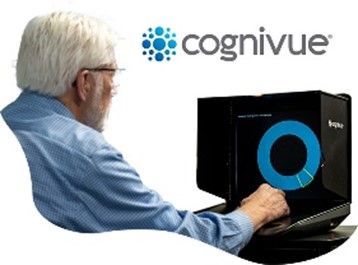
An individual sits at a table using a Cognivue device, interacting with a blue circular graphic on a screen.
By Alliance Personalized Health Care • July 29, 2024
Introducing a new tool we have added to our clinic, filling a gap in the screening for early cognitive deficits … dementia. For an overview of the full screening process, please see our blog titled Neurocognitive Screening.

Colorful ribbon bows arranged on a pale beige background
By Alliance Personalized Health Care • June 17, 2024
The Big “C." No one likes the word, but if we can’t say it, then we can’t look for it … and finding it early is everything. Let’s talk about Cancer Screenings

A tablet displaying digital health data, stethoscope, blood pressure monitor, and face mask on a medical chart background.
By Alliance Personalized Health Care • June 12, 2024
We would like to discuss body composition analysis, dietary choices, exercise regimens, and the integration of that into the Personalized Health Care Plan.

A colorful assortment of fresh produce including tomatoes, eggs, strawberries, an apple, orange, beans, and grains.
By Alliance Personalized Health Care • June 6, 2024
We are excited to share that we have a dietitian that we work closely with, who is helping our patients achieve their nutrition goals. Lauren comes and sees our patients in our clinic, or if you prefer, you can meet her at her office. We highly recommend reaching out to her to accomplish your goals.

A red heart model sits on a line of white pills arranged to look like an EKG heart rate monitor on a blue background.
By Alliance Personalized Health Care • May 24, 2024
At Alliance, it’s all about having personalized health care.  Part of that personalization frequently involves prescription medications. Knowing the chemistry and genetics of each individual can significantly influence the response to those therapies. At Alliance, we are literally aiming to hit the mark as close as possible without undue side effects. Science is finally catching up to modern prescription management and we are pleased to offer our patients pharmacogenomic testing.
Show More