

Cancer Screenings

Alliance Personalized Health Care • June 17, 2024

The Big “C." No one likes the word, but if we can’t say it, then we can’t look for it … and finding it early is everything. Let’s talk about Cancer Screenings

A collection of colorful awareness ribbons arranged on a light beige background.

Prevention and early detection are most important when it comes to these maladies. Statistics suggest that most cancers in humans will develop after the age of 50 years. Regrettably, routine screening is only done for far less than half of all cancers. The American Cancer Society, United States Preventive Task Force, and others, all recommend screening the general population for cancers of the skin, breast, prostate, cervix, and colon. To that, add lung cancer screening for those at increased risk, and still less than half of new cancer diagnoses are actually screened for; the remainder are not, relying on suspicion that arises from early symptoms.

As precision medicine comes to fruition, additional testing IS available. We are pleased to have ready access to enhanced cancer screening via molecular studies of your blood. Some tests detect suspicious DNA profiles in the blood whereas others detect abnormal proteins. Add additional imaging for specific suspicions, and potential full body MRI, and it is now possible to screen for many additional different cancers. As with everything, what and when to test is a personal discussion to be had with your physician. We will help you assess risk factors and track screening results.


We thought it helpful to discuss a few of the many proprietary tests that are now available.


These are companies we are familiar with, and we can help you decide if such tests are suitable for consideration. The most important thing is to be aware that the technology is coming of age, and its’ potential as a tool for better wellness is forthcoming. Let’s discuss three of which you may be unaware.

Galleri looks for a signal associated with cancer.

There is some amount of free floating DNA in our blood (technically, the plasma). Both normal cells and abnormal cells shed this DNA, and it can be detected through molecular analysis. Normal DNA has a very “normal appearance”, sort of like a well organized house, or an evenly spaced bar code we see with purchases. Cancer is “ugly” and generates a different appearance. It can be picked up on and sorted into where it may have originated. Though the body likely develops minor cancers frequently during our lifetime, we have a tumor surveillance network within our immune system that takes care of the problem … until that fails. So if something shows on the blood work that is abnormal, does it mean it WILL be a cancer fight? Nope. And that’s where the confidence and discussion with your doctor comes into play. When should we look, where should we look, or should we look at all.


The Galleri test screens a blood sample for cell-free DNA and identifies whether it comes from healthy or cancer cells, via methylation pattern. The test checks more than 100,000 DNA regions and over one million specific DNA sites to screen for a signal shared by 50+ cancers that may be present at the time of the blood draw. If a cancer signal is detected, results from the test can predict the tissue type or organ associated with the cancer signal. It is important to note that Galleri is a screening test and does not diagnose cancer. Diagnostic testing is needed to confirm cancer. Nor is the Galleri test a genetic risk assessment tool, meaning it does not determine future risk of developing cancer. It is an early detection tool for something that may be present at that moment in time only.


There are two possible results to the test:

  • No Cancer Signal Detected
  • Cancer Signal Detected


You will not receive a list of the 50+ types of cancer and a result for each one. If Galleri detects a cancer signal, your result will include one or two Cancer Signal Origins which predict the tissue type or organ associated with the cancer signal. From there, your doctor will order additional, more refined tests.


The Galleri test does not detect a signal for all cancers and not all cancers can be detected in the blood. False positive and false negative results do occur.


Galleri advertises the ability to detect the following cancers: Adrenal Cortical Carcinoma, Ampulla of Vater, Anus, Appendix Carcinoma, Bile Ducts Distal, Bile Ducts Intrahepatic, Bile Ducts Perihilar, Bladder, Bone, Breast, Cervix, Colon and Rectum, Esophagus and Esophagogastric Junction, Gallbladder, Gastrointestinal Stromal Tumor, Gestational Trophoblastic Neoplasms, Kidney, Larynx, Leukemia, Liver, Lung, Lymphoma (Hodgkin and Non-Hodgkin), Melanoma of the Skin, Merkel Cell Carcinoma, Mesothelioma, Nasal Cavity and Paranasal Sinuses Nasopharynx, Neuroendocrine Tumors of the Appendix, Neuroendocrine Tumors of the Colon and Rectum, Neuroendocrine Tumors of the Pancreas, Oral Cavity, Oropharynx (HPV-Mediated, p16+), Oropharynx (p16-) and Hypopharynx, Ovary, Fallopian Tube and Primary Peritoneum, Pancreas, Penis, Plasma Cell Myeloma and Plasma Cell Disorders, Prostate, Small Intestine, Soft Tissue Sarcoma of the Abdomen and Thoracic Visceral Organs, Soft Tissue Sarcoma of the Head and Neck, Soft Tissue Sarcoma of the Retroperitoneum, Soft Tissue Sarcoma of the Trunk and Extremities, Soft Tissue Sarcoma Unusual Histologies and Sites, Stomach, Testis, Ureter, Uterus carcinoma and sarcoma, Vagina, and Vulva


The Galleri Test is something that we stock in our office, and courtesy of our relationship with SignatureMD, it is available for a discounted price from what is advertised on the internet. We will draw the blood in our office.


NodifyLung helps specifically with sorting out benign lung nodules from lung cancer.

It is a common and frustrating situation. Chest xrays are done often for various reasons. Sometimes they are done in people who have an increased risk for lung cancer. Sometimes the xray finds a spot. They call it a nodule if it is under 3 cm; a mass if it is bigger. A mass is a problem, and all stops are pulled out to pursue its’ identity. But the nodules are another matter. Have they been there for years, residual from a long forgotten infection? Or are they new and the beginnings of what will become a monster? It’s easy to say biopsy the area, but it’s always the details of how to get to that small target and how much risk is involved (it is in the chest with things like the lung, the heart, and the arteries) vs just waiting and repeating the test later. If it grows, then action will be taken. But if it grew …. Arrgghh!


There are some proprietary technologies available to help lean that decision. One that we are acquainted with is specifically for lung nodules (that 1-3 cm) “spot”. It is called NodifyLung, also stocked in our office; also a blood test that we will draw. The way it works is as follows: It is an integrated classifier that measures the ratio of two proteins (LG3BP and C163A) and combined with several clinical and radiological factors provided by your doctor, helps score those nodules into those that are more or less likely to be benign. It will literally give the percent chance that those nodules will go one way or another. Sometimes it is very helpful, where a flip of the coin before the test results in a 10% chance the nodule is a problem. That in turn makes the decision to wait a few months and repeat CT scan much more comforting. Of course, if the test result is just the opposite, say 90% chance the nodule is a problem, then it makes the more risky procedure of biopsy far more acceptable.


For those who are wondering about these two proteins… like everything, it is complicated. The LG3BP is a beta-galactoside-biding protein that has been implicated in modulating cell-cell and cell-matrix interactions (cancer likes to grow). The C163A is a scavenger receptor that helps clear iron complexes, and is a marker of local inflammation (cancer is highly inflammatory). Somewhere in the math, this can estimate risk.

And then there is Total Body MRI.

A technology, that in the past was cost prohibitive and not detailed enough to sort out normal lumps and bumps from serious concern. We don’t want to pursue every lump on the inside of the body as most are not a problem (think about the skin and how not every wart, mole, or spot is actually a serious problem), except for the ones that ARE a problem. Again, arrgghh! But, today’s MRI is not your grandfather’s MRI (wait, were there MRI back then? The first MRI was in 1977).


There are a few companies out there that do this and it can require travel. The tests aren’t cheap and they aren’t for everyone, but it IS a technology available for the right situation, and it merits discussion. In general, these machines use an average power magnet (measured in teslas) but do a lot with the computer programming to generate extra spins and weightings. It takes an hour inside a tube, and the result is a lot of “voxels” (ie 3D pixels) with multi parametric and diffusion weighted images. The product is a reasonable look inside the body, with enough detail to give some indication as to the risk of what is seen.


Well, that is a tour of just three proprietary tests that are available. They are not suitable for everyone, and certainly not part of the universally recognized set of recommended screening tests. Which, if you were wondering, the universal screening tests are aimed only at: breast, prostate, and colon. Most doctors add to that anyway, including general screening for leukemia, some for kidney and liver, along with a focus on risk factors that lead to skin checks, lung tests, and focused testing. Most doctors try to go above the basic need. But, basic needs and universal recommendations trail modern science by years. At Alliance, we want to make you aware of what else is available now, work together on whether to pursue those options, and help to optimize your health.

Recent Posts

A stethoscope and a decorative red wire heart lie on a bright blue surface next to a calculator.
By Alliance Personalized Health Care • May 23, 2025
This blog post reviews the personal health journal which includes an inventory of all his/her tests, tabulated tracking of important results, and more!

A healthcare professional adjusting headphones on a patient during a hearing test in a clinical office setting.
By Alliance Personalized Health Care • December 2, 2024
Get your hearing tested with Alliance Personalized Health Care

A wooden cutout of a human head profile on a white wooden background, with a red heart icon inside the brain area.
By Alliance Personalized Health Care • September 6, 2024
Brain health is extremely important. A large part of what we do at Alliance is focused on maintaining and improving brain health. As we age, we all slow down, both physically and mentally, and we want to decrease the decline of both as much as possible. One of the ways we are able to evaluate cognitive changes is by doing lab work, then evaluating that in context with the entire person. We have partnered with Quest Lab and UMethod to provide a test known as RestoreU Method in order to have a more inclusive way of evaluating someone’s cognitive function. This is used in conjunction with the Cognivue test, other labs and possibly imaging, which were described in a previous blog.

Colorful assortment of salmon, avocado, berries, seeds, and vegetables on a gray background
By Alliance Personalized Health Care • August 20, 2024
We venture to say that most patients are familiar with the word cholesterol and have some concept of the importance it plays in cardiovascular health. It is also likely that most people have heard that there is more to it than simply measuring total cholesterol. After all, when was the last time your doctor ordered anything other than a four-way profile of LDL, HDL, Triglycerides, and Total Cholesterol? And for those of you who like math, did you know the formula (roughly) is: HDL + LDL + 0.2(Triglycerides) = Total?

A 3D visualization of multiple rod-shaped bacteria with flagella, depicted in shades of blue.
By Alliance Personalized Healthcare • August 7, 2024
I once heard a microbiologist say that the human is nothing more than a transport medium for the microbiological world. What he is inferring is that though we use our 30 trillion cells to orchestrate physical movement in this world, the 40 trillion microbes that live within us lack that mobility. That’s not a type-o … there are likely more microbes living within the gut than there are human cells for any individual. And it would be too anthropocentric of us to think we should ignore them. Though small in size, they do outnumber us, and what they lack in size they make up for in a complicated world of symbiotic relationships, outright battle for dominance, and production of by-products to improve their own environment which directly affects our gut health and overall sense of well being. Let’s talk about some common maladies for which we should consider the microbiome. There are many who suffer from recurring or constant difficulties involving nausea, pain, change in bowel habits, and food intolerances. So often, an extensive workup finds no severe problem that needs intervention. After that good news, the focus turns to managing symptoms. And that’s where things remain difficult for years, involving medications with side effects and expense. Of course, it’s in vogue to talk about food allergies and to adjust our diet, but why does that matter when it’s not a true allergy? Remember those trillions of microbes? Could they be part of the problem or part of the solution? Turns out, the answer is yes. Not always, but a lot of the time. For what we call functional abdominal pain (anatomically fine, no obvious disease, just doesn’t function smoothly), it can often be from “dysbiosis”, an imbalance in the groups of microbes. We humans function smoother when the various groups of organisms remain in a steady state. When one group outmaneuvers another or migrates location within the gut, it can create dysbiosis and functional abdominal pain. That’s where probiotics get their credibility. But which probiotic (hundreds to choose from) and in which combination? The reason there is so much confusion is that each of us is unique. Imagine that; one size does not fit all.
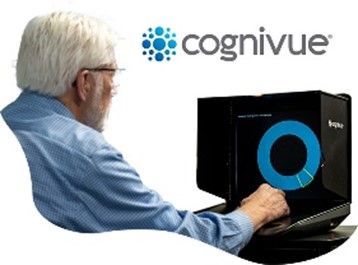
An individual sits at a table using a Cognivue device, interacting with a blue circular graphic on a screen.
By Alliance Personalized Health Care • July 29, 2024
Introducing a new tool we have added to our clinic, filling a gap in the screening for early cognitive deficits … dementia. For an overview of the full screening process, please see our blog titled Neurocognitive Screening.

Two pairs of hands holding a paper cutout of a human head silhouette featuring a pink heart with an EKG line.
By Alliance Personalized Health Care • July 29, 2024
Neurocognition refers to the functional aspects of the brain. That includes receiving proper input from the senses (hearing, vision, touch, smell). It involves the processing of received information. It certainly involves the orchestration of complex movements, emotional interactions with others, and complex thought processing.

A tablet displaying digital health data, stethoscope, blood pressure monitor, and face mask on a medical chart background.
By Alliance Personalized Health Care • June 12, 2024
We would like to discuss body composition analysis, dietary choices, exercise regimens, and the integration of that into the Personalized Health Care Plan.

A colorful assortment of fresh produce including tomatoes, eggs, strawberries, an apple, orange, beans, and grains.
By Alliance Personalized Health Care • June 6, 2024
We are excited to share that we have a dietitian that we work closely with, who is helping our patients achieve their nutrition goals. Lauren comes and sees our patients in our clinic, or if you prefer, you can meet her at her office. We highly recommend reaching out to her to accomplish your goals.

A red heart model sits on a line of white pills arranged to look like an EKG heart rate monitor on a blue background.
By Alliance Personalized Health Care • May 24, 2024
At Alliance, it’s all about having personalized health care.  Part of that personalization frequently involves prescription medications. Knowing the chemistry and genetics of each individual can significantly influence the response to those therapies. At Alliance, we are literally aiming to hit the mark as close as possible without undue side effects. Science is finally catching up to modern prescription management and we are pleased to offer our patients pharmacogenomic testing.
Show More